When we talk about “Lu Cha” (绿茶), we are simply referring to green tea in Chinese. But behind these two syllables lies much more than a hot drink: it is the oldest, most consumed and most carefully crafted category of tea in all of China.
Unlike black or oolong teas, Lu Cha undergoes no fermentation. This technical detail is what preserves all of its antioxidants and its characteristic vegetal freshness.
The secret to its manufacture: fixing the green color immediately after harvesting
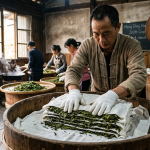
To understand the profile of a Lu Cha, one must look at what happens immediately after the buds and young leaves are harvested. To prevent natural oxidation, the producer immediately applies intense heat. This is the stage of Shaqing (the “killing of green”).
In China, this drying process is traditionally done in large metal woks heated by wood or gas. This method imparts a rounded character, notes of roasted nuts and chestnut, and a subtle peppery sweetness. In contrast, the Japanese method uses steam, resulting in teas with a much stronger marine and iodine character.
It is this step in the wok that preserves:
-
Catechins (especially EGCG) : powerful antioxidants that fight against oxidative stress.
-
L-theanine : an amino acid that promotes concentration while calming the nervous system.
-
Chlorophyll : responsible for its bright color and purifying action.
The best wines of Lu Cha to know
Not all Chinese green teas are created equal. Depending on the region, the terrain, and the expertise of the tea master, the aromatic profiles vary drastically.
Long Jing (Dragon Well)
This is the undisputed king of Chinese green teas, originating from Hangzhou. Its leaves are hand-shaped, completely flattened against the sides of the wok. In the cup, it develops rich notes of roasted hazelnut and chestnut, and a remarkably delicate finish.
Bi Lo Chun (Green Spring Snail)
Harvested in Jiangsu province, this tea is recognizable by its small leaves rolled into tight spirals and covered with a white down. As tea plants often grow among fruit trees (peach, plum), Bi Lo Chun absorbs these aromas and offers a very floral and fruity profile.
Anji Bai Cha
Despite its name (“Anji white tea”), this is actually Lu Cha. It is produced from a rare variety of tea plant whose young shoots in spring are almost albino. Very rich in L-theanine and low in polyphenols, it is an exceptionally smooth tea, without any bitterness.
How to prepare Lu Cha to avoid bitterness?
The most common mistake is to boil the leaves. Lu Cha is delicate: water that is too hot immediately extracts the tannins and masks the subtlety of the aromas.
-
The water temperature Aim for a temperature between 70°C and 80°C maximum. If you don’t have an adjustable kettle, let your boiling water sit for 5 minutes in the open kettle.
-
The dosage : Allow approximately 3 grams of leaves for 20 to 25 cl of water.
-
The infusion time : In the Western method (in a teapot), 2 to 3 minutes are sufficient. In the traditional method (Gongfu Cha), opt for a glass container or a Gaiwan, with short infusions of 30 to 45 seconds that you can repeat 4 to 5 times.
-
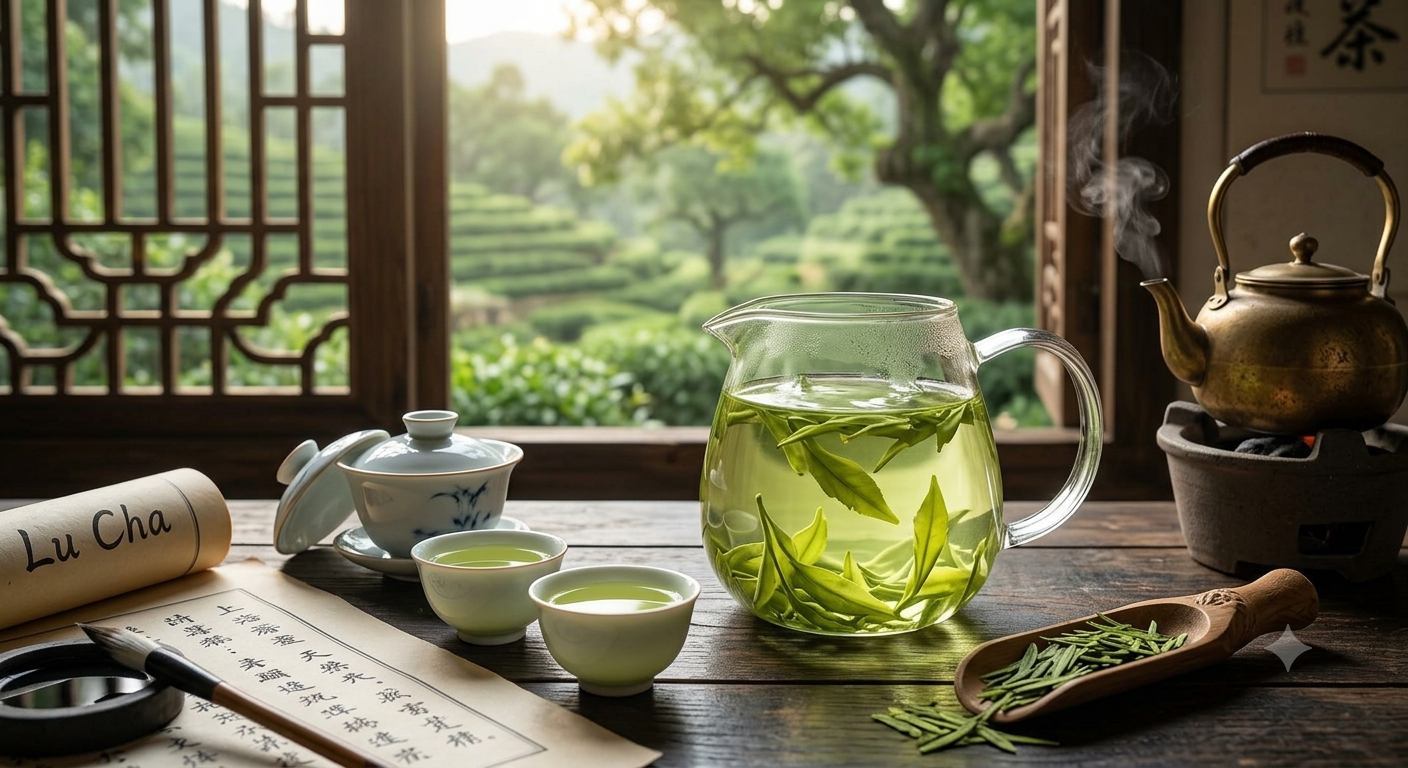
The visual trick Prepare it in a large, clear glass. Watching the Lu Cha leaves unfurl and slowly sink to the bottom of the glass is an integral part of the enjoyment of tasting it.
Incorporating Lu Cha into your day means adopting a simple gesture to support your metabolism, clear your mind in the afternoon and offer yourself a real sensory break.